Bring disc golf
to your city.
We know the grants. We know the designers. We know the process. We’ve done it across multiple Utah cities. Disc golf is professional park infrastructure, so treat it like any other amenity in your system.
You wouldn’t ask a pickleball player to build a court.
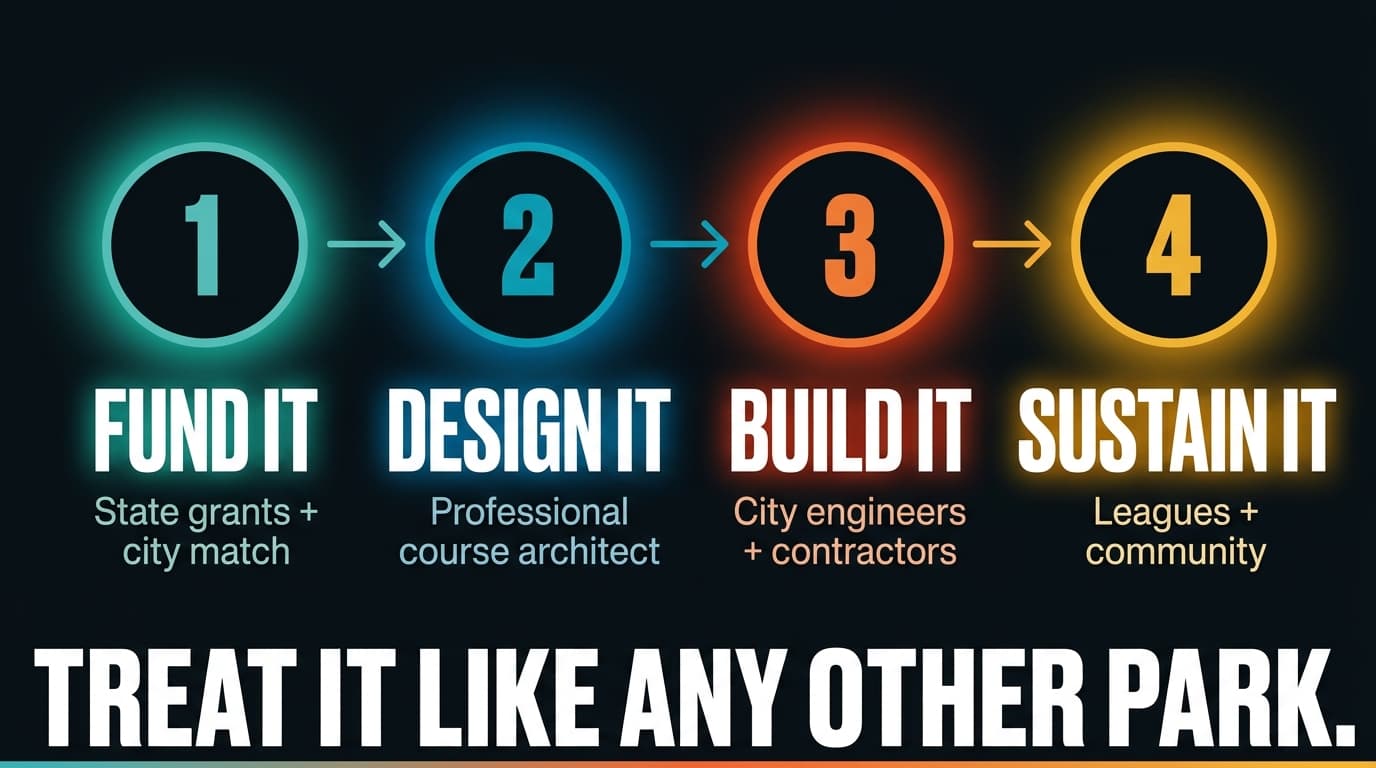
Disc golf deserves the same process as every other park amenity. Professional course design. City engineering. Contractor builds. Irrigation, shade trees, ADA walkways, signage. A maintenance plan.
When cities invest in professional disc golf infrastructure, the return is immediate. Play counts surge. Tournaments arrive. Tourism follows. And the community that uses the course funds its maintenance through league operations — year-round.
Four steps. One partner.
Build parks.
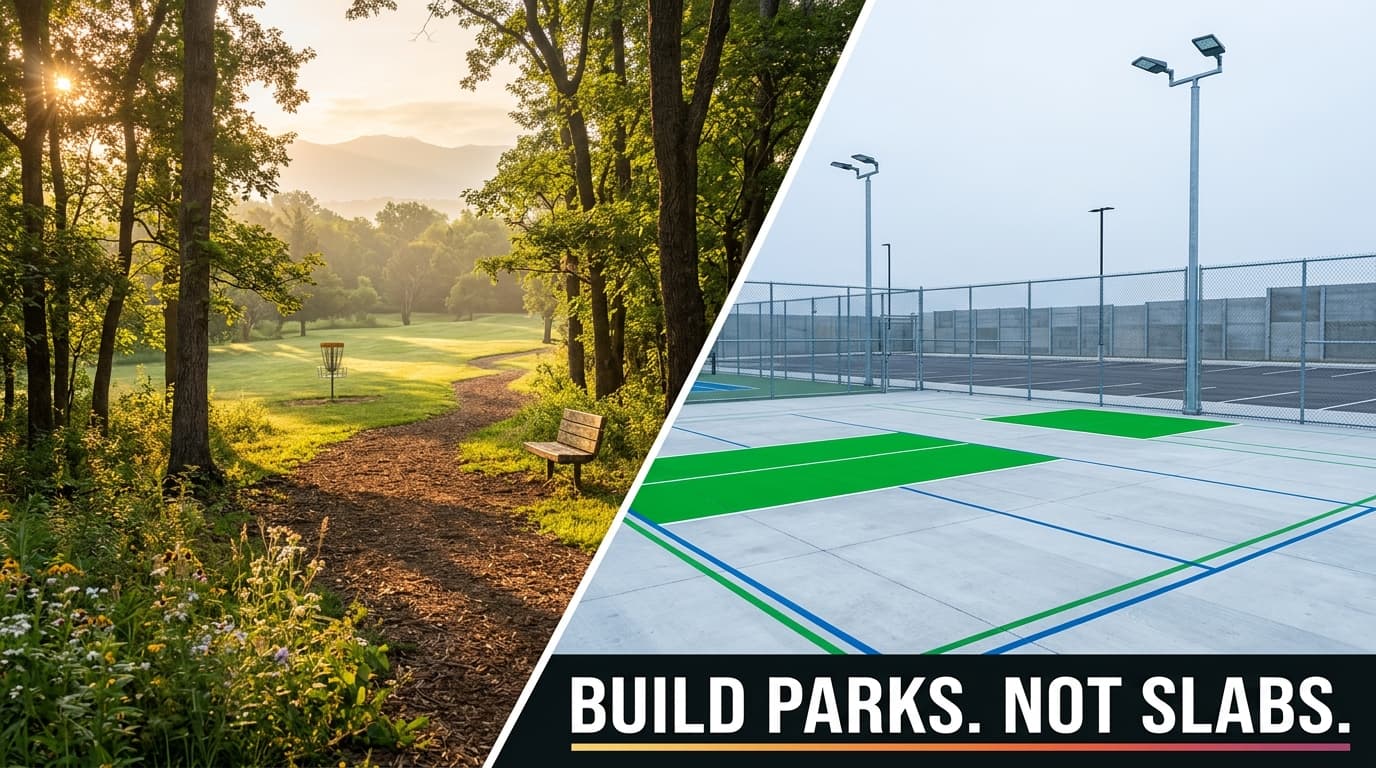
Not slabs.
A professional disc golf course is a park — shade trees, native landscaping, benches, gathering spaces, ADA walkways, educational signage, miles of trails through natural terrain.
It uses land that’s hard to develop for anything else — wooded hillsides, wetlands, ravines. Zero noise complaints. Zero neighborhood opposition. A place people want to be.
Two cities.
Two results.
Every city that invested in professional disc golf infrastructure saw immediate, measurable returns.
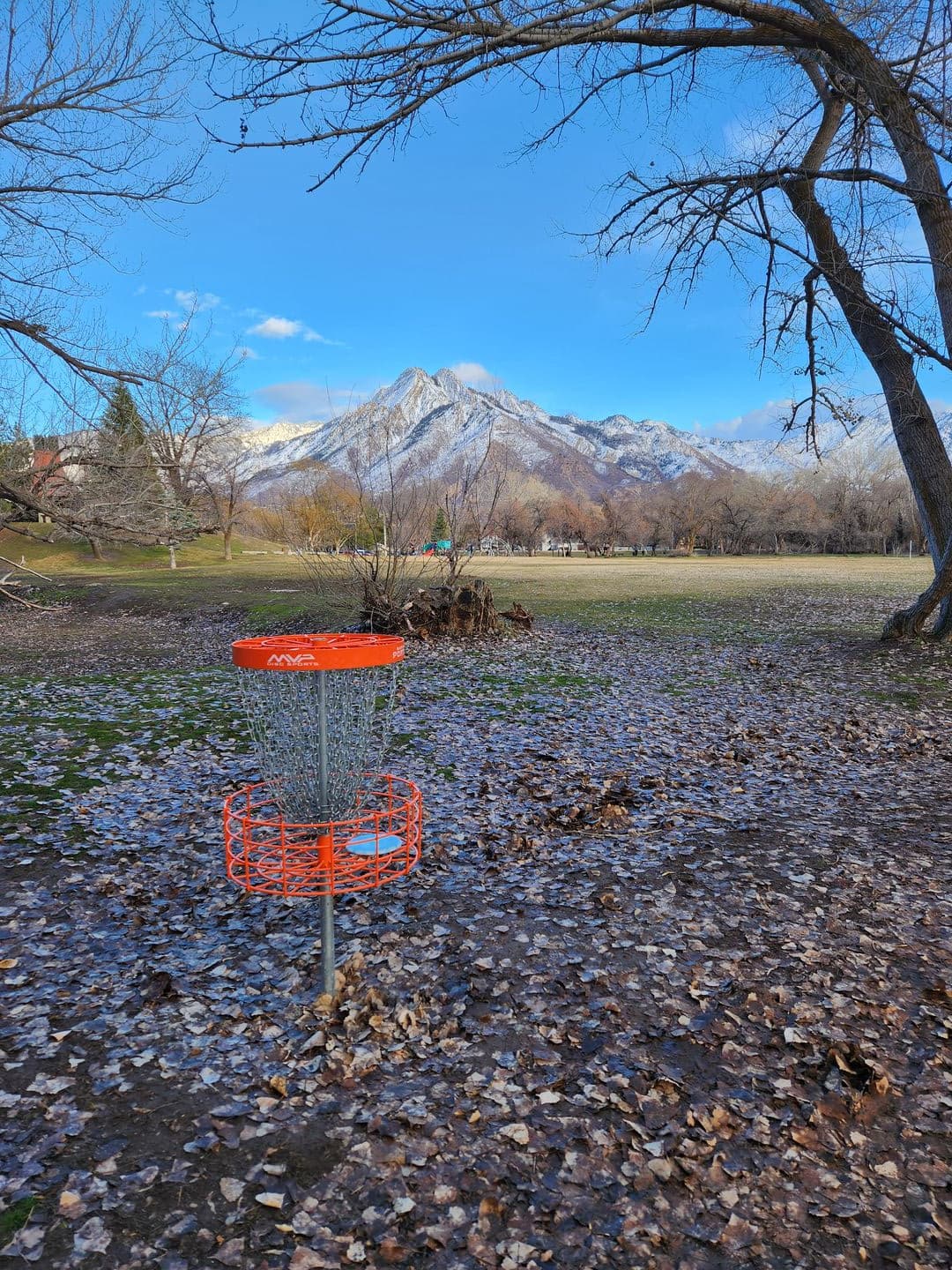
Creekside
Professional renovation of a historic course. Play count surged 50% the following year despite an 8-week closure. Rose from 5th to 3rd busiest course in the US. Selected for the 2026 US Women's Disc Golf Championship — a PDGA Major.
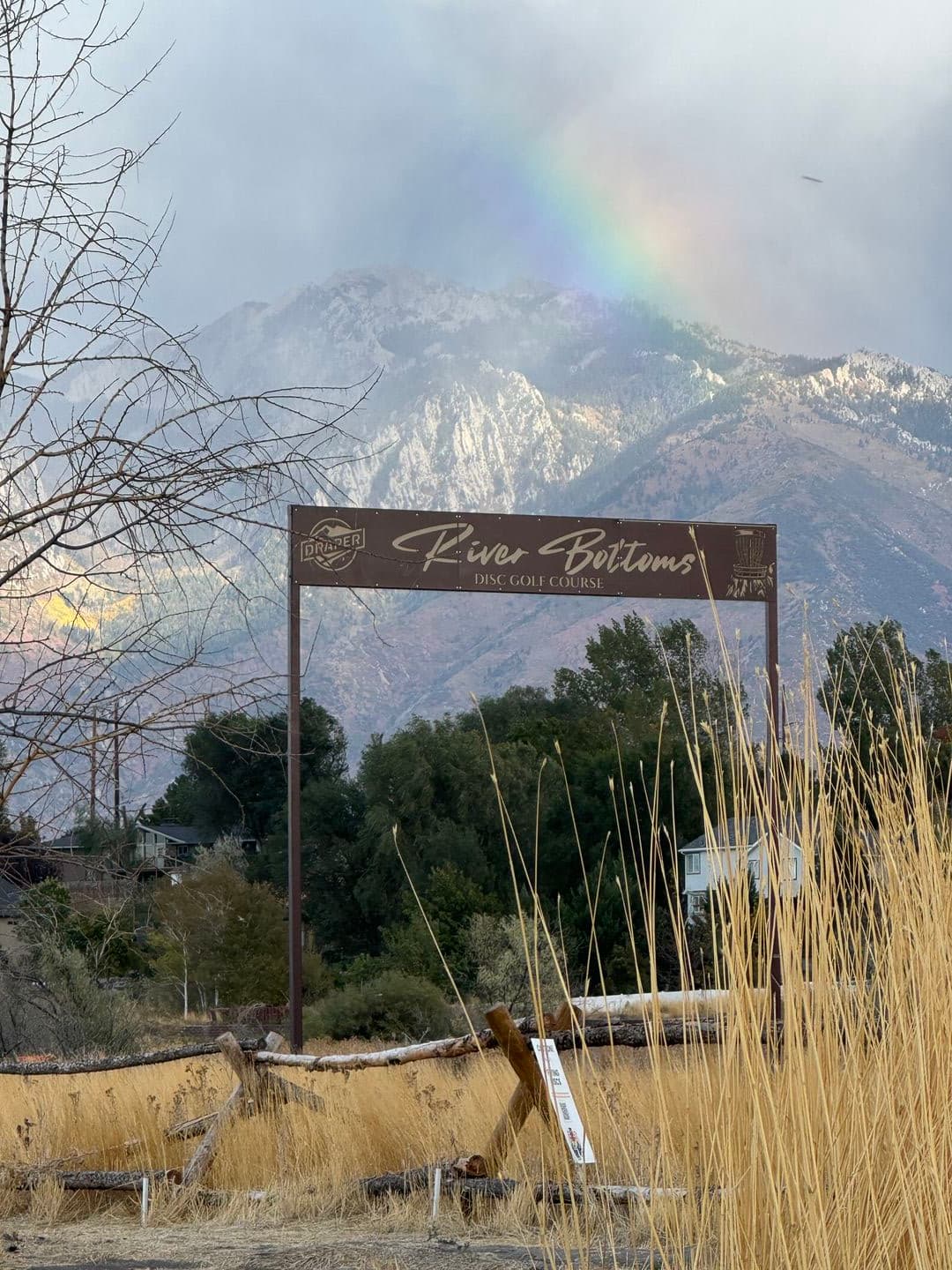
River Bottoms
First disc golf course in Utah to secure UORG funding for installation. Additional $30K UORG for irrigation and 38 shade trees. 4,463 rounds in 2025. 172 visitors traveled 300+ miles to play. Selected to host the 2026 Salt Lake Open.
What cities
ask us.
What does it cost the city?
Most projects use a grant + city match model. UORG covers up to $200K with a city match. The match can include in-kind contributions like staff time, equipment, or land access. A full 18-hole championship course runs $200K–$400K. A 9-hole starter course can be built for under $100K.
Who designs the course?
A professional course designer — the same way you'd hire a landscape architect for a playground. Design fees typically run $25K–$45K depending on scope. We can recommend designers with Utah experience and PDGA certification.
Who builds it?
Your contractors and your engineering department. Concrete tee pads, basket installation, trail grading, drainage, ADA walkways, irrigation, signage — the same vendors and processes your parks department already uses.
What about maintenance?
ElevateUT runs PDGA-sanctioned leagues at partner courses. League registration fees fund a Course Improvement Fund — dedicated maintenance dollars for each course. The community that plays the course funds its upkeep. Year-round, not just opening day.
What about liability?
Disc golf carries one of the lowest liability profiles of any park amenity. No projectiles leaving the field of play. No physical contact. No specialized safety equipment required. Standard municipal park insurance covers it.
How long does it take?
Grant application to ribbon cutting: 12–18 months. Our funded projects have gone from UORG award to opening day within a single season. Design phase is 2–3 months. Construction is 3–6 months depending on scope.
What land works?
Disc golf thrives on land that's hard to develop for anything else — wooded hillsides, wetlands, flood plains, ravines, former landfills. It doesn't require flat, graded surfaces. Many of Utah's best courses sit on land that was otherwise underutilized.
Is there actually demand?
Utah disc golf participation grew 86% since 2020. PDGA membership doubled. Sanctioned events tripled. Salt Lake City has 0.92 disc golf courses per 100K residents — 31% of the national average. Lehi's own master plan identifies disc golf as an active recreation need.
Let’s talk about
your parks.
We’ll walk your team through the grant landscape, recommend a designer, and scope what professional disc golf infrastructure looks like on your land. No cost. No commitment. Just a conversation.